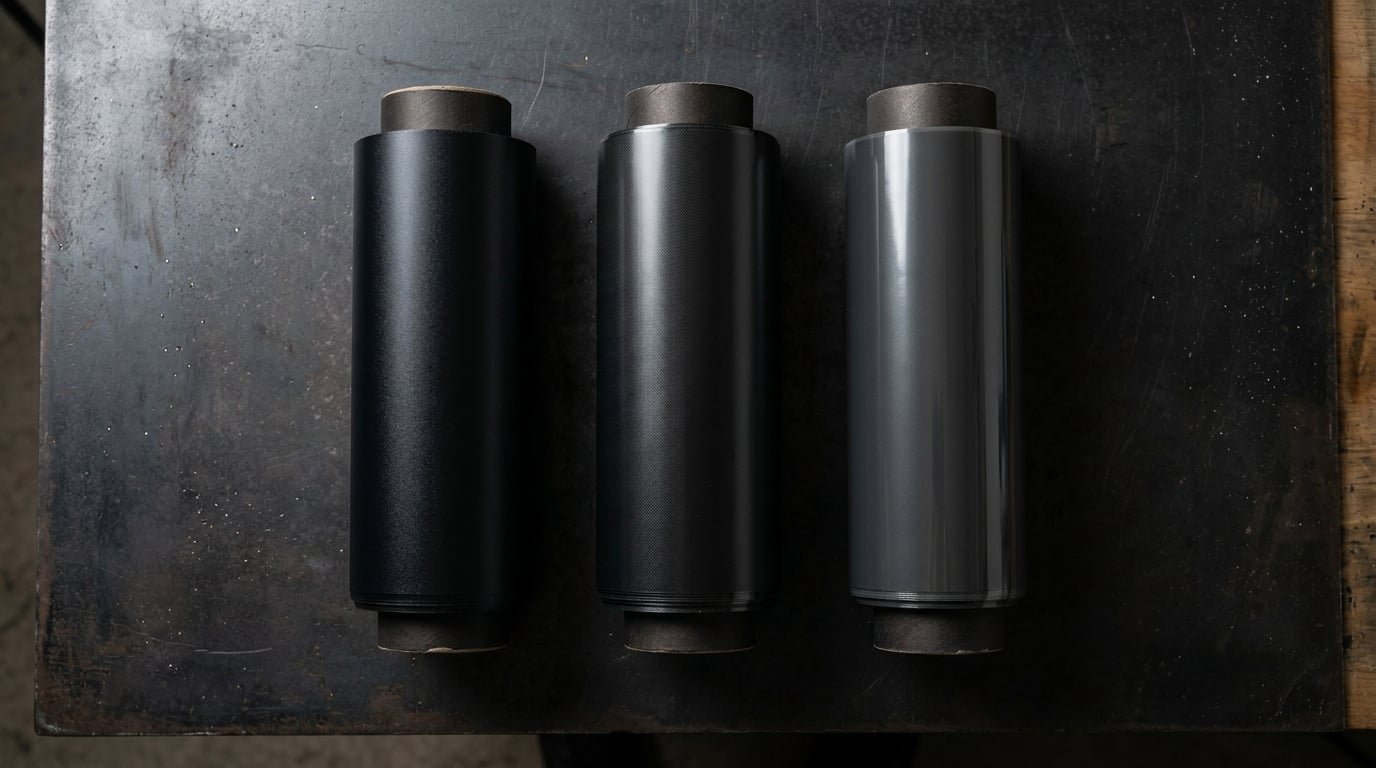
When you book window tinting, the biggest decision isn't really how dark to go — it's which type of film to use. The shade is just the look. The film technology underneath determines how much heat it blocks, whether it fades, whether it messes with your phone signal, and how long it lasts. Here's how the three main types stack up.
Dyed film: the budget option
Dyed film gets its colour from a dye layer sandwiched in the polyester. It's the cheapest tint you can buy and looks perfectly good on day one.
Pros
- Lowest cost.
- Good, non-reflective matte look initially.
- No signal interference (no metal).
Cons
- Weakest heat rejection of the three.
- Can fade to a purple tinge after a few years of UV exposure.
- Shorter lifespan.
Best for: drivers on a tight budget who mainly want the look and aren't fussed about maximum heat rejection or long-term durability.
Carbon film: the all-rounder
Carbon film replaces dye with carbon particles. This gives a deep, matte black finish that won't fade, plus a genuine jump in heat rejection.
Pros
- Excellent, fade-resistant colour — stays black for the life of the film.
- Good heat and infrared rejection — noticeably cooler cabin than dyed.
- No metal, so no interference with mobile, GPS, DAB or keyless systems.
- Great value for the performance.
Cons
- More expensive than dyed (but worth it).
- Doesn't quite match ceramic for infrared heat rejection.
Best for: the majority of drivers — carbon is our most popular choice and the sweet spot of price and performance.
Ceramic film: the premium choice
Ceramic film uses non-conductive ceramic nanoparticles. It's the most advanced tint available and the best performer in every category that matters — without needing to be dark.
Pros
- The best heat and infrared rejection — even lighter shades keep the cabin dramatically cooler.
- Blocks up to 99% of UV rays.
- No fading, no signal interference.
- Superb clarity — no hazy, mirror-like look.
- Longest lifespan.
Cons
- The most expensive option.
Best for: drivers who want maximum comfort, UV protection and longevity — especially anyone who parks in the sun, does long motorway miles, or wants the coolest possible cabin without going too dark.
Quick comparison
- Heat rejection: Ceramic > Carbon > Dyed
- Fade resistance: Ceramic = Carbon > Dyed
- UV protection: Ceramic > Carbon > Dyed
- Signal-friendly: All three (none contain metal)
- Price: Ceramic > Carbon > Dyed
So which should you choose?
If budget is the priority and it's mostly cosmetic, dyed will do the job. For most people, carbon is the smart buy — it looks superb, never fades and rejects real heat for a sensible price. If you want the very best — the coolest cabin, the most UV protection and film that'll outlast the others — ceramic is worth the extra.
Not sure? That's what we're here for. At Wizz's Wraps we'll show you samples, talk through how you use your car, and recommend the film that gives you the best result for your budget.
Book Window Tinting in Stoke-on-Trent
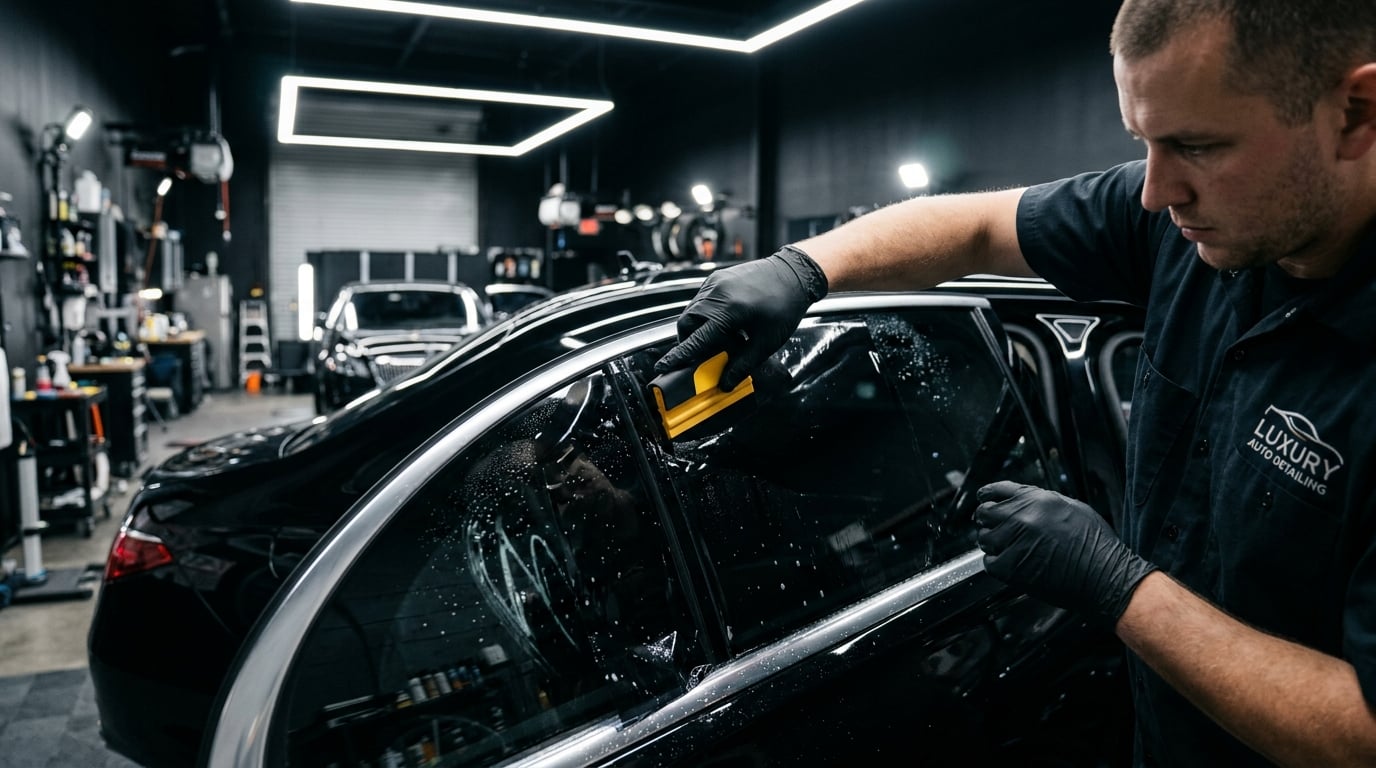
At Wizz's Wraps in Tunstall, Stoke-on-Trent, we've tinted everything from daily runarounds to show-stopping supercars. Every install uses premium, professionally cut film, is fitted in our clean indoor bay, and is backed by our workmanship guarantee (1-year installation warranty plus 3–5 years on the film itself, depending on the product).
We only fit tint that keeps your car road-legal where the law requires it, and we'll happily talk you through the right shade for your vehicle. Pop in to 31a Parsonage Street, Tunstall, ST6 5HL, call us on 07533 621258, or request a quote through our website. We're rated 4.7★ across 182 Google reviews from drivers across Staffordshire.